It has to be true
A function can say what it needs and what it promises. A loop can say why it finishes. If two parallel pieces would overwrite the same memory, the build stops.
The build command is lic build.

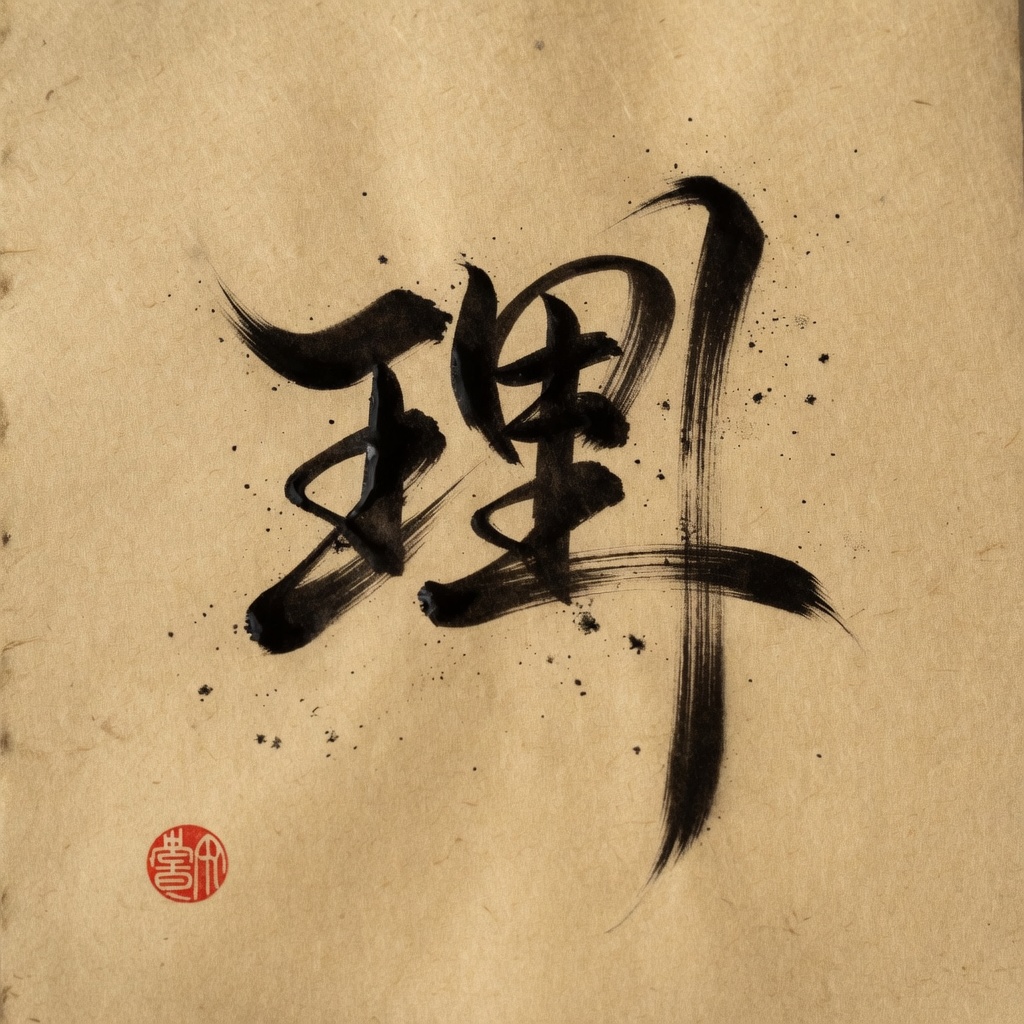
理 · reason
Li is a compiled, high-performance, proofable programming language for science, engineering, and AI. The syntax is easy for humans and AI alike.
The priority
Li will not trade a wrong answer for a quicker one. The program has to check out, it has to be easy to read, and only then does it compile to native speed.
A function can say what it needs and what it promises. A loop can say why it finishes. If two parallel pieces would overwrite the same memory, the build stops.
The build command is lic build.
The code looks like Python or Nim: indentation,
def, types like list[T].
Names stay close to the science.
Shortcuts only if they still check out.
You write the math. The compiler handles the rest.
A speed flag never skips the check.
Examples
Open the orbit tab. The time step has to be greater than
zero. After the update, energy cannot have drifted too far.
You put those facts in the function, not in a comment. The
compiler checks them when you build.
requires is the before.
ensures is the after.
def main() -> int
  requires true
  ensures result == 0
  decreases 0
=
  echo "Hello from Li"
  return 0
def advance_orbit(body: Body, dt: float) -> unit
requires dt > 0
ensures energy_drift(body) < max_drift
decreases 0
=
var force: Vec3 = gravity_from(body.position)
body.velocity = body.velocity + force * dt
body.position = body.position + body.velocity * dtdef dot4(x: array[4, float], y: array[4, float]) -> float
requires true
ensures result == x[0] * y[0] + x[1] * y[1] + x[2] * y[2] + x[3] * y[3]
decreases 0
=
return x @ ydef main() -> int
requires true
ensures result == 0
decreases 0
=
var buf: array[8, float]
parallel for j in 0..<8
requires disjoint_elem(j, buf)
decreases 8 - j
=
buf[j] = 0.0
return 0How it compiles
Two commands. One is a quick look while you type. The other is the real compile. Only the real compile makes a program you can run, and only after the checks pass.
This is the compile you ship. It checks the file, then writes a binary.
Fast feedback while you type. Useful in the editor.
It does not replace build.
These are not in the language:
Any
unsafe
sorry
assume
bare cast
unproved parallel for
Who it’s for
If you simulate heat, orbits, robots, or games, Li is meant to be the language you ship, not a notebook you later rewrite in C. If a chat writes the first draft, the same file still has to check. That is how AI coding becomes software you can keep, not a pile of guesses.
Orbits, molecules, heat, waves. The first sketch and the
fast version can be the same .li file.
You can write that an index stays in range, or that energy does not drift too far. That sits next to the update, not in a paper beside it.
An LLM can write the update. It cannot skip the rules.
lic build checks the file. Trust that, not
the prompt.
AI coding
A lot of AI coding looks finished and is not. The chat
invents a time step, a loop that never ends, or two threads
that write the same memory. In an ordinary language you find
that later. In Li those limits sit in the file, and
lic build has to accept the file before you get
a program.
That is the point of an AI-first language for science and engineering: the model writes the same syntax a person would, and the compiler is what makes the software solid. You do not trust the prompt. You trust the check.
Indentation, def, names from the science.
A model writes the same .li a person would.
There is no second dialect for chats, and no hidden
Any.
Before a function runs, some facts must already be true.
After it returns, some facts must still be true. A loop
must finish. The compiler accepts or rejects. There is
no sorry to cover a guess.
If the file builds, you have a native program with the limits still in it. If it does not, the model has to fix the file, not explain the bug in prose.
Hand a chat llms.txt and the agent handbook. Those are markdown on purpose. Do not scrape the styled docs.
Get started
Most people start with the installer. To build from source you need LLVM, CMake, and a C++ compiler. Versions are in the getting-started guide.
$ curl -fsSL https://lilangverse.xyz/cli/install.sh | bash
irm https://lilangverse.xyz/cli/install.ps1 | iex
$ git clone https://gitlab.lilangverse.xyz/li-langverse/lic.git
$ cd lic
$ ./scripts/build.sh
$ ./build/compiler/lic/lic build hello.li -o hello
$ ./hello
Where it is
lic already checks types and memory, and can
emit native code for a growing set of programs. The full
mathematical proof step is still being built. Today
build rejects problems it can see. The rest
is listed in the
provability gaps.
Open source. MIT or Apache-2.0. The handbook is markdown so a chat can ingest it. Start at llms.txt.